The Building Code of Australia requires multiple alarms in a property to be interconnected in certain circumstances. Victorian, New South Wales, Western and South Australian legislation require adherence for properties built since May 2014. Are you confident your properties comply?
What are interconnected smoke alarms?
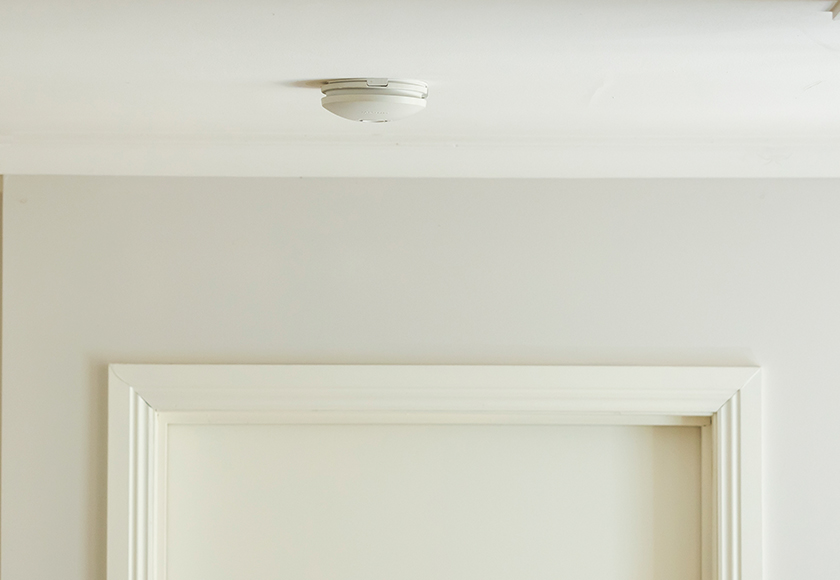
Interconnected smoke alarms are designed to communicate with each other and sound in unison when one alarm detects smoke. Essential to fire safety is early detection. Interconnected alarms are the best way to provide early warning for occupants to escape.
Fire can engulf a modern home in just a few minutes. With interconnected alarms, occupants who may otherwise be out of audible range of the detecting alarm will be alerted early enough to act, increasing survivability in a house fire by more than 50%.
When do I need to install them?
Victorian¹, New South Wales² South Australian³ and Western Australian4 legislation require compliance with the Building Code of Australia (BCA). The BCA provides technical provisions for the design and construction of buildings through the National Construction Code (NCC).
In the case of fire safety requirements, BCA 2014 (E2.2a and Part 3.7.5) in summary requires that smoke alarms must:
- Be installed in all Class 1a (single dwelling) and Class 2 buildings (apartments);
- Comply with Australian Standards (AS 3786)
- Be mains powered and interconnected where the dwelling was constructed after 1 May 2014 and there is more than one alarm in the property.
Of note is the build date requirement of 1 May 2014. Properties built after this date, in Victoria, New South Wales and South Australia must have interconnected smoke alarms where more than one is present.
In WA, regulation 31A(2)(b) of the Building Regulations 2012 provides a 12 month transition period allowing the building surveyor who is certifying the plans and specifications of the dwelling to nominate the applicable building standards of the building code that was in effect 12 months before the time the application for the building permit was made.
This will allow buildings to comply with and be approved to BCA 2013 until 30 April 2015.
Liability and responsibility for non-compliance with the BCA ultimately rests with the builder, not the owner. Owners can either chase the builder (or the builder’s insurance) to rectify the issue or enlist Detector Inspector to provide a quote to install upgraded, interconnected smoke alarms via the property manager.
What’s Detector Inspector’s approach?
We have subscribed to RP Data from Core Logic that provides an accurate build date for ~80% of Australian properties. By sourcing this information from RP Data, we have largely removed the need for time consuming back and forth questions to property managers and/or owners.
In addition, our technicians have been trained to identify whether multiple alarms are interconnected.
When we find multiple non-interconnected smoke alarms and are confident of the property's build date being post 1 May 2014, we will flag the property as ‘non-compliant’ and issue a quote to upgrade the alarms to compliant, interconnected alarms.
In the 20% of cases where RP Data can’t tell us the build date confidently, and where there are multiple alarms that are not interconnected, following our smoke alarm safety check, we will mark the property “Compliant*” with a rider that if the property owner is aware of the build date being 1 May, 2014 or after, that they must notify the property manager in writing and an upgrade to interconnected alarms will be required.
Not sure of the portfolio's compliance status?
Detector Inspector's smoke alarm safety check provides property managers, owners and tenants with compliance confidence and peace of mind that their property and occupants are protected by working smoke alarms.
Already with Detector Inspector but unsure of the interconnection status of your property’s alarms? We can conduct a proactive audit of any properties previously serviced so that you know the compliance status of your portfolio.
For non-Detector Inspector owners, we are now offering the option to easily enrol online. Click here to get started.
Legislation requiring compliance with the minimum standards under the Building Code of Australia/National Construction code:
¹ In Victoria, the Building Act 1993 (Vic) and the Building Regulations 2018 (Vic) enshrine the NCC via Volumes 1 and 2 of the Building Code of Australia (“BCA”). The BCA Volume 2 2014 applies to the construction of all residential buildings in Victoria and is administered and enforced by local councils. The Building Regulations 2018 (Vic), Part 9, Clause 145, states that interconnected smoke alarms need to be installed in accordance with the BCA Volume 2 2014 key build date requirement, which is a reference to 1 May, 2014.
² In NSW, it is the Environmental Planning and Assessment Act 1979 (NSW) ("EPA Act”) that requires adherence to the BCA Volume 2 2014. Both the EPA Act (s 6.10) and the associated Environmental Planning and Assessment (Development Certification and Fire Safety) Regulation 2021 (r 19, r 22(1)(b), r 22(1)(c)) (“EPA Regulation”) require that properties comply with the BCA at the time the application for the construction certificate was made.
³ In South Australia, it is the Planning, Development and Infrastructure Act 2016 (SA) (“PDI Act”) that requires adherence to the BCA. Associated with the PDI Act, the Planning, Development and Infrastructure (General) Regulations 2017 (SA) (“PDI Regulations”) deals with fire safety requirements (r 95). The PDI Regulations (r, 95 (2), r 95(3)), state that requirements for smoke alarm installations in Class 1 and 2 Buildings are subject to any other requirement in the BCA.
4 In Western Australia, specific regulations mandate the installation of compliant smoke alarms in residential properties that are sold, rented, or hired. These requirements are outlined in the Building Act 2011 and the Building Regulations 2012.