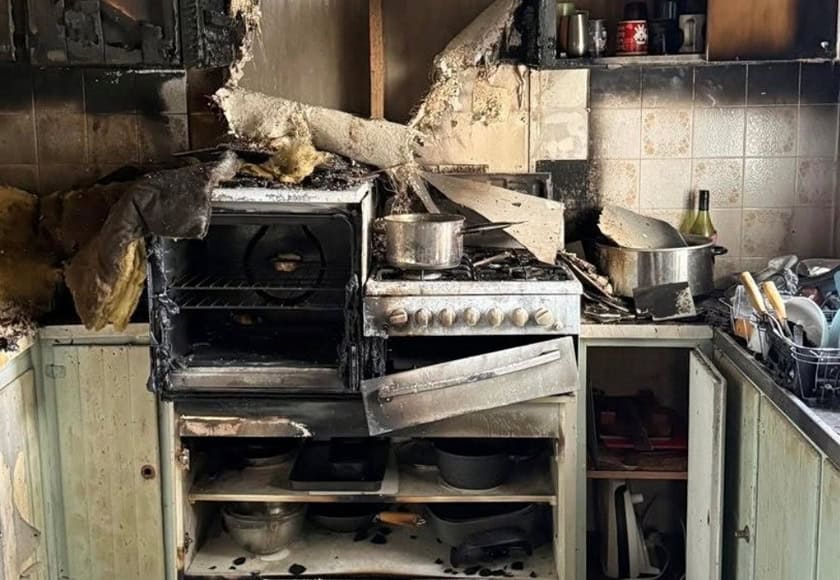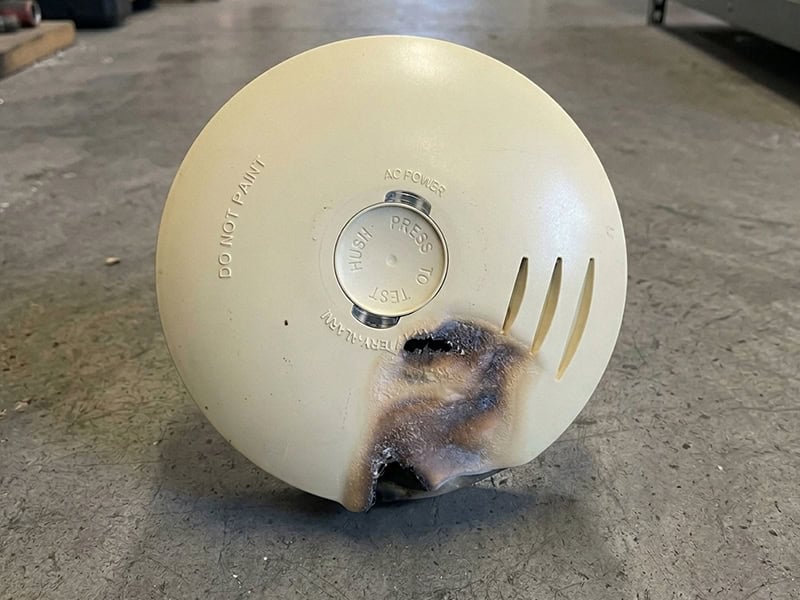
In a concerning reminder that even safety devices can become hazards when neglected, Fire and Rescue New South Wales recently responded to a house fire caused by an unlikely source — a smoke alarm itself.
The ignition source was identified as a hard-wired, AC-powered smoke alarm that was reportedly more than 25 years past its expiry date.
While smoke alarms are designed to save lives, this incident highlights an often-forgotten fact that smoke alarms have a lifespan of 10 years and cannot be relied upon past their expiry date.
When safety devices become risks
Smoke alarms don’t last forever. After around 10 years, not only can the internal smoke sensor degrade, but in hard-wired units, the electrical components themselves can also begin to deteriorate.
Ageing wiring, worn insulation, and failing circuitry can all increase the risk of electrical faults — which, in rare cases like this, can become an ignition source.
In this instance, the alarm had been in place for more than double its intended lifespan, significantly increasing the likelihood of failure.
Fire safety experts warn that outdated or poorly maintained alarms can be just as dangerous as having no alarm at all — either by failing to activate in an emergency or, as seen here, contributing to the fire itself.
Finding a smoke alarm's expiry date

All smoke alarms have a manufacturing date on the label. Alarms must be replaced 10 years after that date. The location and format of this information can vary between models, so if you’re unsure, check the user manual for your specific smoke alarm.
A broader safety concern
The incident also reflects a wider issue across Australian homes.
According to Fire and Rescue NSW, crews attended more than 3,300 house fires in 2025 alone, resulting in 29 fatalities and more than 360 injuries. In over 50% of fatal house fires, no working smoke alarm was present.
Simply having a smoke alarm installed isn’t enough. To ensure it can perform when it matters most, it must be:
- Within its service life
- Tested regularly
- Properly maintained
- Replaced when required
- Not tampered with or disabled